

S-GEDSI explores how Indigenous oral narratives can contribute to conversations about gender equality, diversity, social inclusion, education and the protection of vulnerable and marginalised members of society. Working with Kusaal-, Dagaare- and Dagbani-speaking communities in northern Ghana, the project examines both the inequalities and stereotypes represented in oral traditions and the Indigenous values and cultural practices that promote care, responsibility, inclusion and social cohesion.
Fieldwork was conducted in nine communities across Ghana's Upper East, Upper West and Northern Regions. Through storytelling sessions, interviews and focus group discussions, the team collected 125 folktales, 35 from the Upper East Region, 40 from the Upper West Region and 50 from the Northern Region, together with community perspectives on gender, disability, orphanhood, widowhood, marginalisation and Indigenous systems of care and protection. After editing, 100 stories were approved and uploaded online: 43 for Dagaare, 25 for Dagbani and 32 for Kusaal.
The stories demonstrate that Mabia oral traditions are more than forms of entertainment. They are important repositories of Indigenous Knowledge Systems, carrying ideas about social responsibility, justice, relationships, inclusion and the treatment of vulnerable members of society. Some narratives reproduce gendered stereotypes and social inequalities, while others challenge exclusion and demonstrate the consequences of greed, discrimination, injustice and the mistreatment of vulnerable people. The project's analysis therefore treats oral narratives as important cultural resources through which communities can critically reflect on both inherited values and changing contemporary realities.
As part of the project's commitment to documentation, preservation and public engagement, selected Kusaal, Dagaare and Dagbani folktales collected through S-GEDSI are being made available on this website. The digital collection extends the project's academic outputs by making Indigenous oral knowledge accessible to researchers, educators, students, community members and the wider public. More than sixty folktales have also been archived in the University of Vienna's Phaidra repository, with a parallel corpus deposited in the J. H. Kwabena Nketia Archives at the Institute of African Studies, University of Ghana.
The project particularly contributes to SDG 4 (Quality Education) and SDG 5 (Gender Equality) by documenting Indigenous cultural knowledge and using community narratives to stimulate reflection on gender relations, social inclusion and the protection of marginalised groups.
Project Team
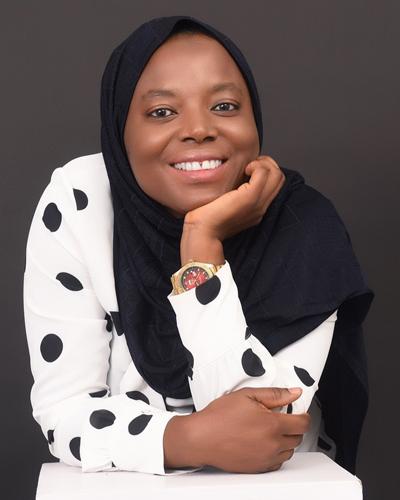
Prof. Hasiyatu Abubakari – Principal Investigator and Project Coordinator: Institute of African Studies, University of Ghana
Prof. Abubakari leads and coordinates the S-GEDSI project. She contributes expertise in African linguistics, Indigenous Knowledge Systems, oral literature and gender studies and led the Kusaal component of the research in the Upper East Region. She coordinated the overall research design, fieldwork and project implementation and led the transcription, translation and analysis of the Kusaal narratives. She also leads the project's work on Indigenous cultural mechanisms of care and protection for women, children, orphans and persons with disabilities, as well as the public dissemination and digital presentation of the collected narratives.
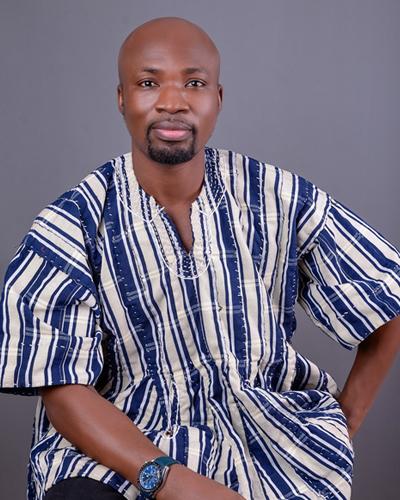
Dr. Alexander Angsongna – Co-Principal Investigator: Department of African Studies, University of Vienna
Dr. Angsongna contributes expertise in linguistics, research methodology, and Dagaare language and culture. He led fieldwork in the Dagaare-speaking communities of the Upper West Region and was responsible for the transcription, translation and linguistic-cultural analysis of the Dagaare narratives. His research within the project also examines the linguistic and cultural construction of the trickster figure, Badɛre, the Spider in Dagaare folktales.
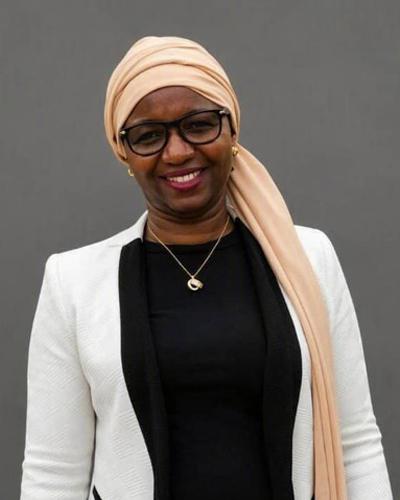
Dr Rahaina Tahiru – Co-Principal Investigator: University for Development Studies, Ghana
Dr Tahiru contributes expertise in gender and development studies and led the Dagbani component of the project in the Northern Region. She coordinated fieldwork, transcription and translation of the Dagbani narratives and contributes particularly to the project's analysis of gender inequality, social exclusion and cultural representations of marginalised groups across the three Mabia language communities.
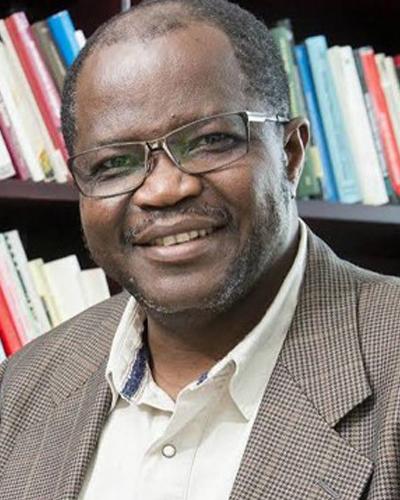
Univ.-Prof. Adams Bodomo – Project Mentor: Department of African Studies, University of Vienna
Professor Bodomo provides academic mentorship and scholarly guidance to the project. Drawing on his extensive expertise in African linguistics, African Studies and Dagaare language and oral traditions, he supports the project's comparative and interdisciplinary dimensions. He has also supported the team's research activities and collaborative research stays at the University of Vienna.
Collaborative Research
The strength of S-GEDSI lies in the complementary expertise of its researchers and its Ghana-Austria partnership. Each researcher led the fieldwork, transcription and translation associated with their respective linguistic and regional expertise, while the team worked collectively on comparative analysis, publications, seminars, archiving and dissemination. The collaboration has resulted in a substantial multilingual corpus of Mabia oral narratives, three jointly developed research articles, public seminars in Ghana and Austria, and the preservation and dissemination of Indigenous oral knowledge through institutional archives and digital platforms.
This partnership embodies Africa-UniNet's broader objective of strengthening interdisciplinary and transdisciplinary cooperation between African and Austrian research institutions while creating sustainable scholarly networks and jointly produced knowledge.